Insularity Etude
Insularity Etude (2023)
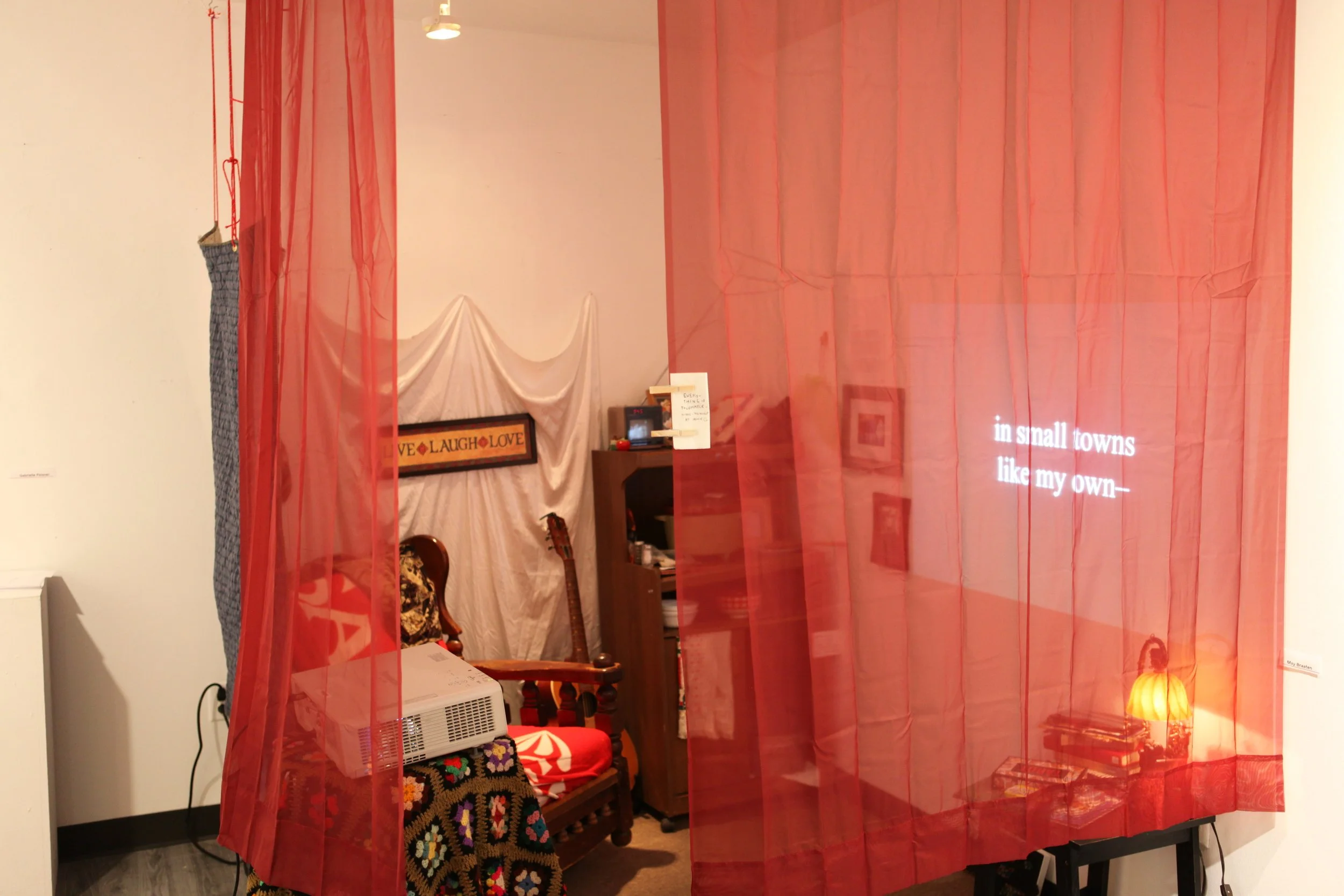
is an assemblage installation that reconsiders small town American life with a nuance often denied to rural, majority-white, working-class communities. Reconstructed with found objects from the homes of country-living community members, the work is at once a reflection on urban-rural sociopolitical divisions, progressive elitism, community, and my own identity, as well as a three-dimensional defense of a proudly and self-proclaimedly backwoods aesthetic.
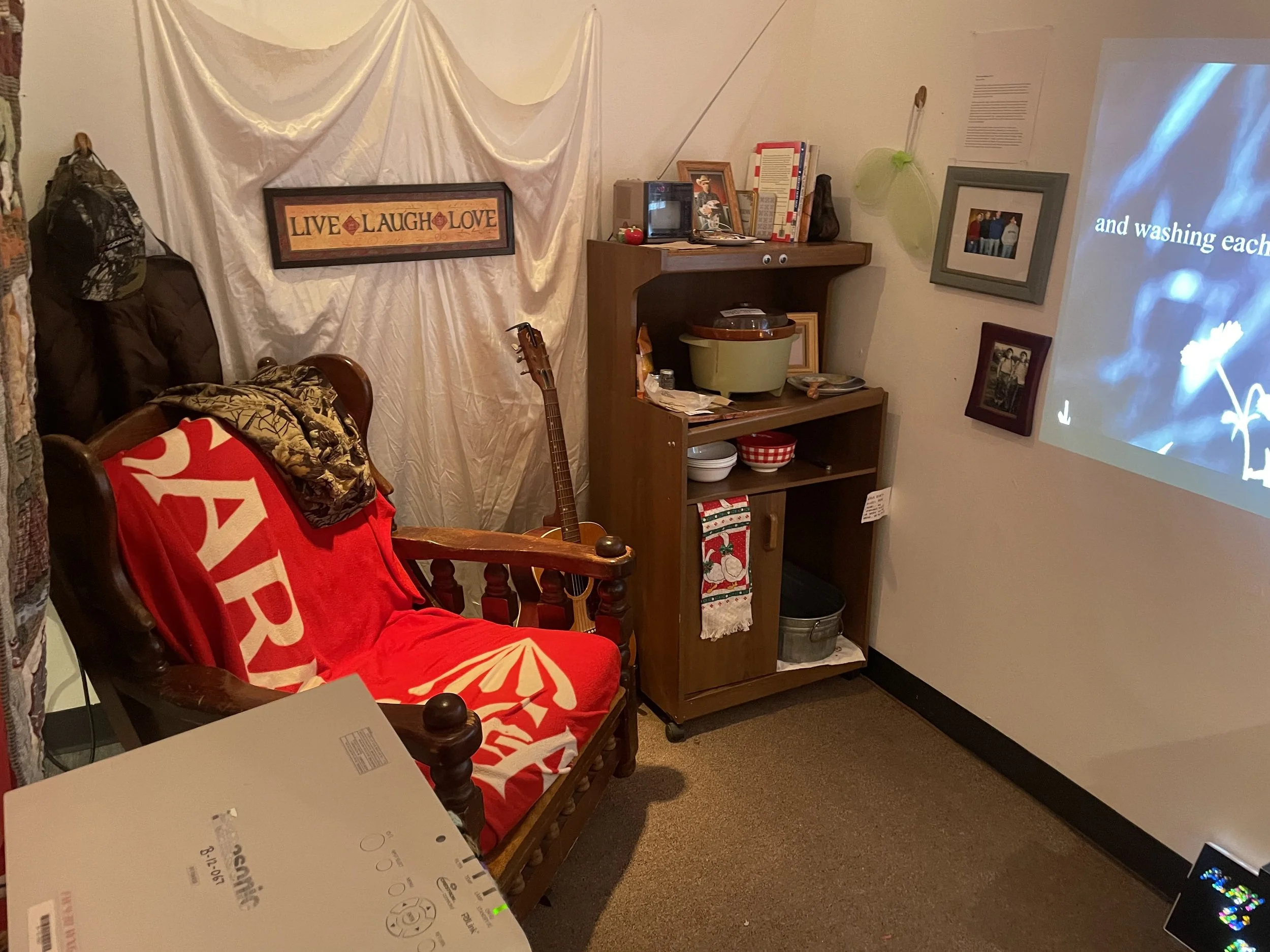
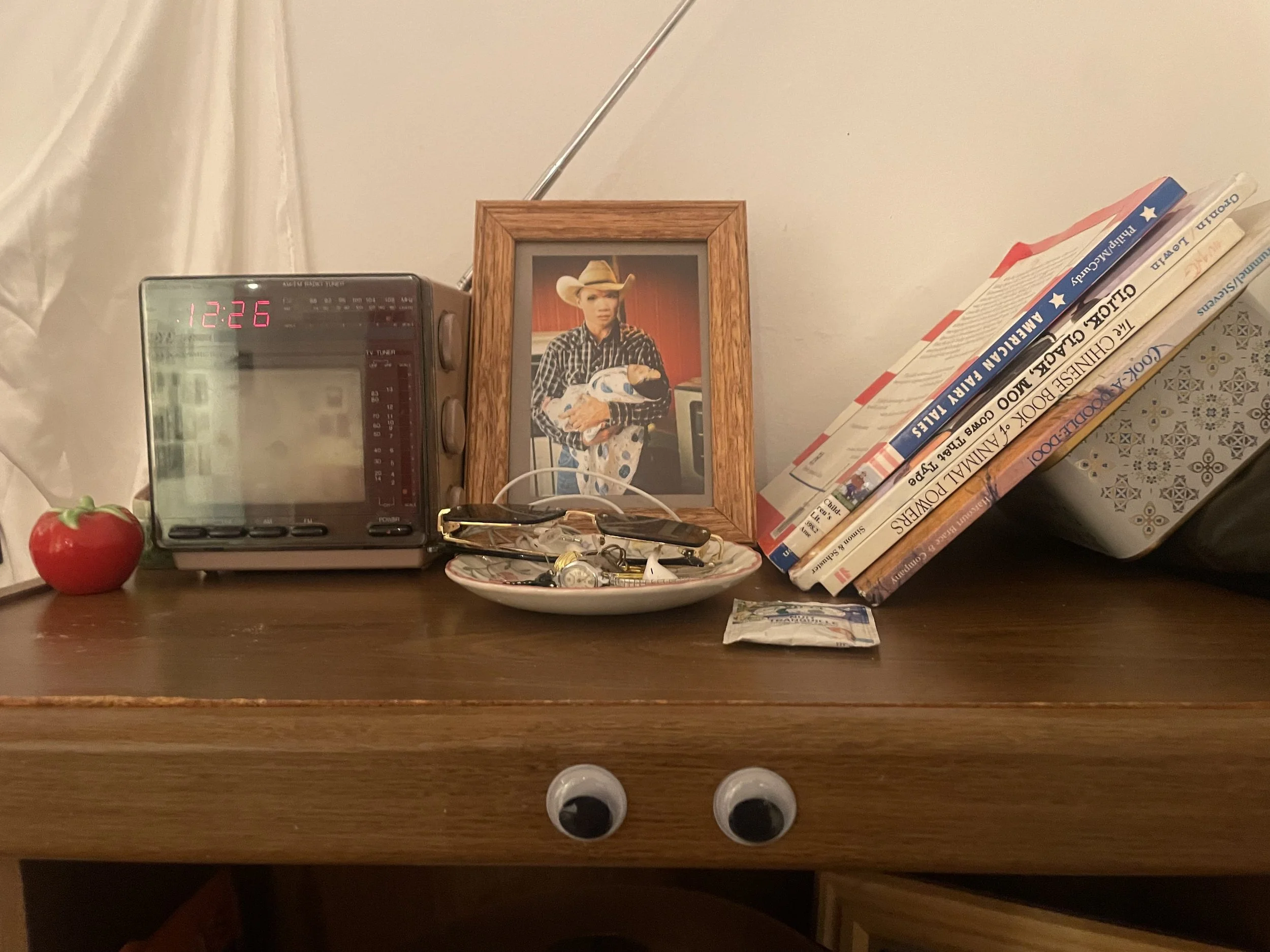
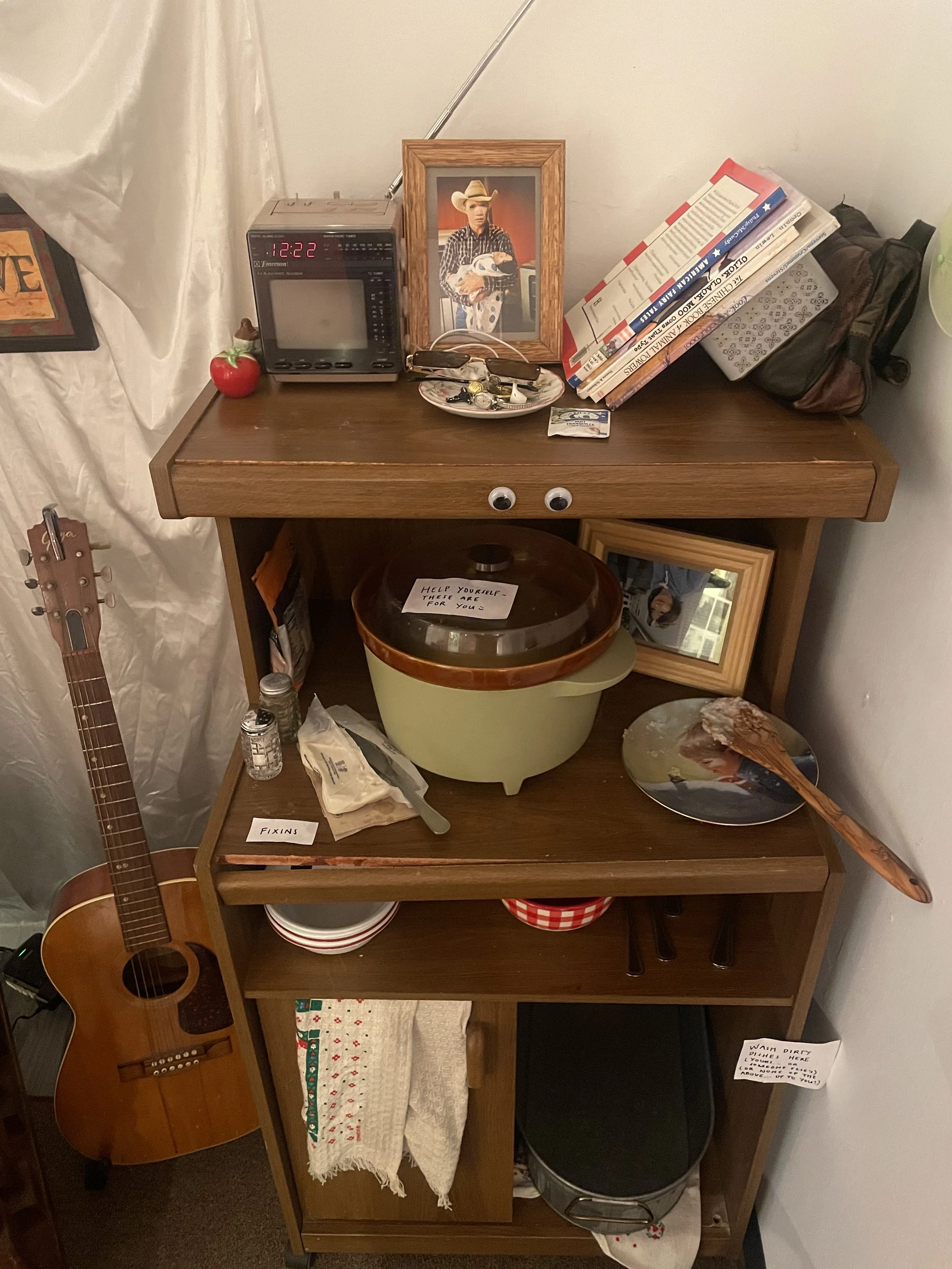
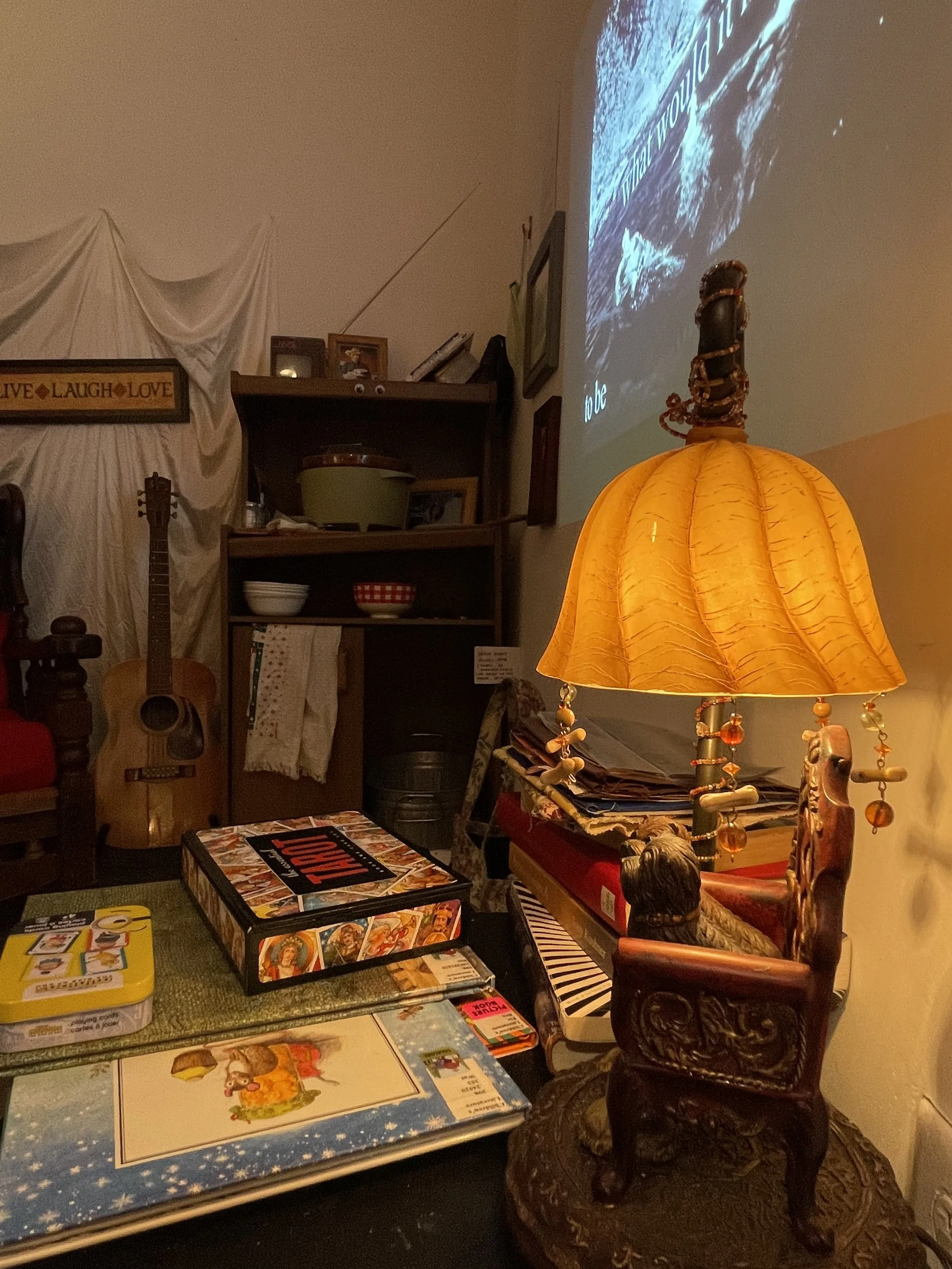
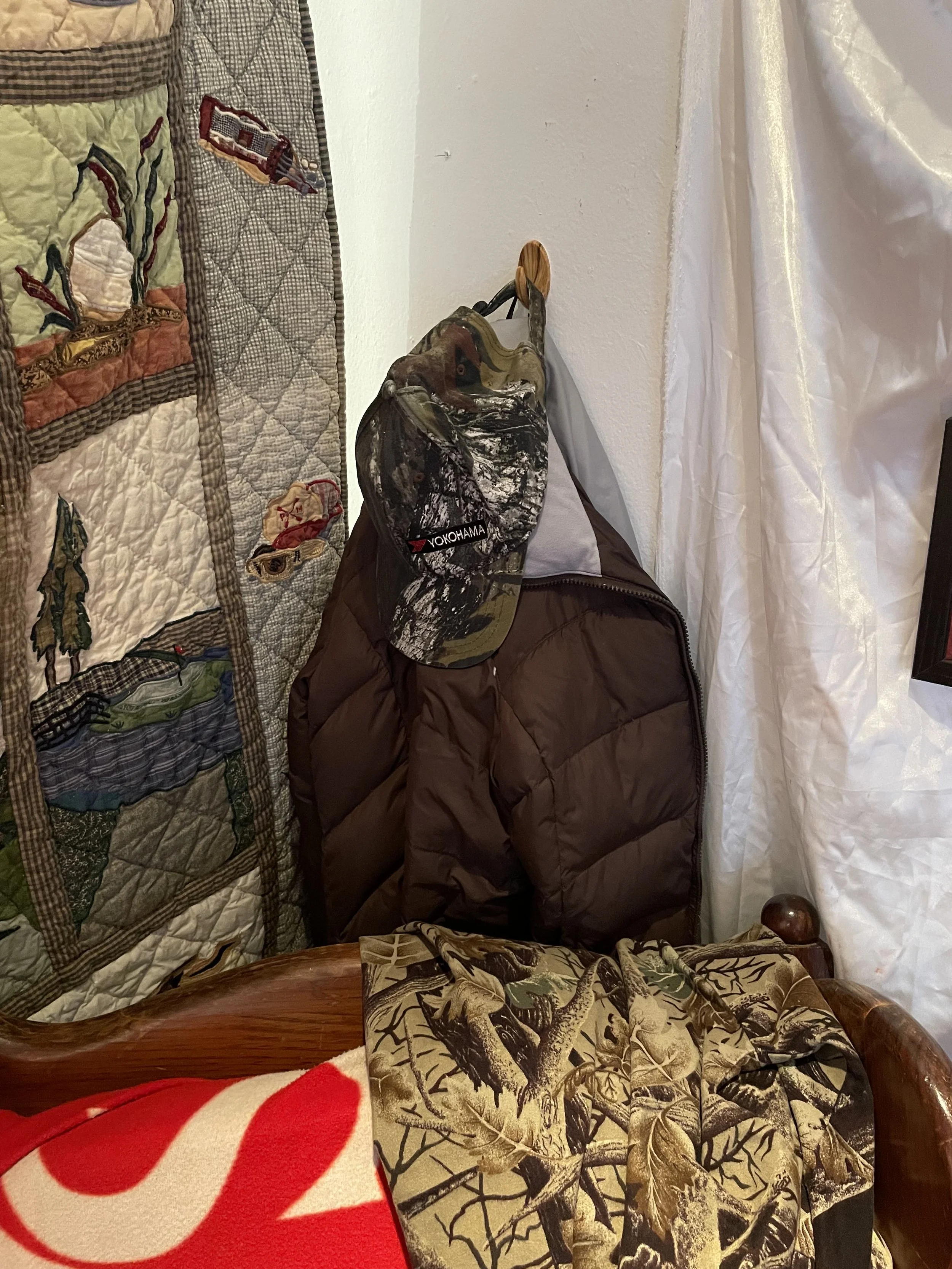
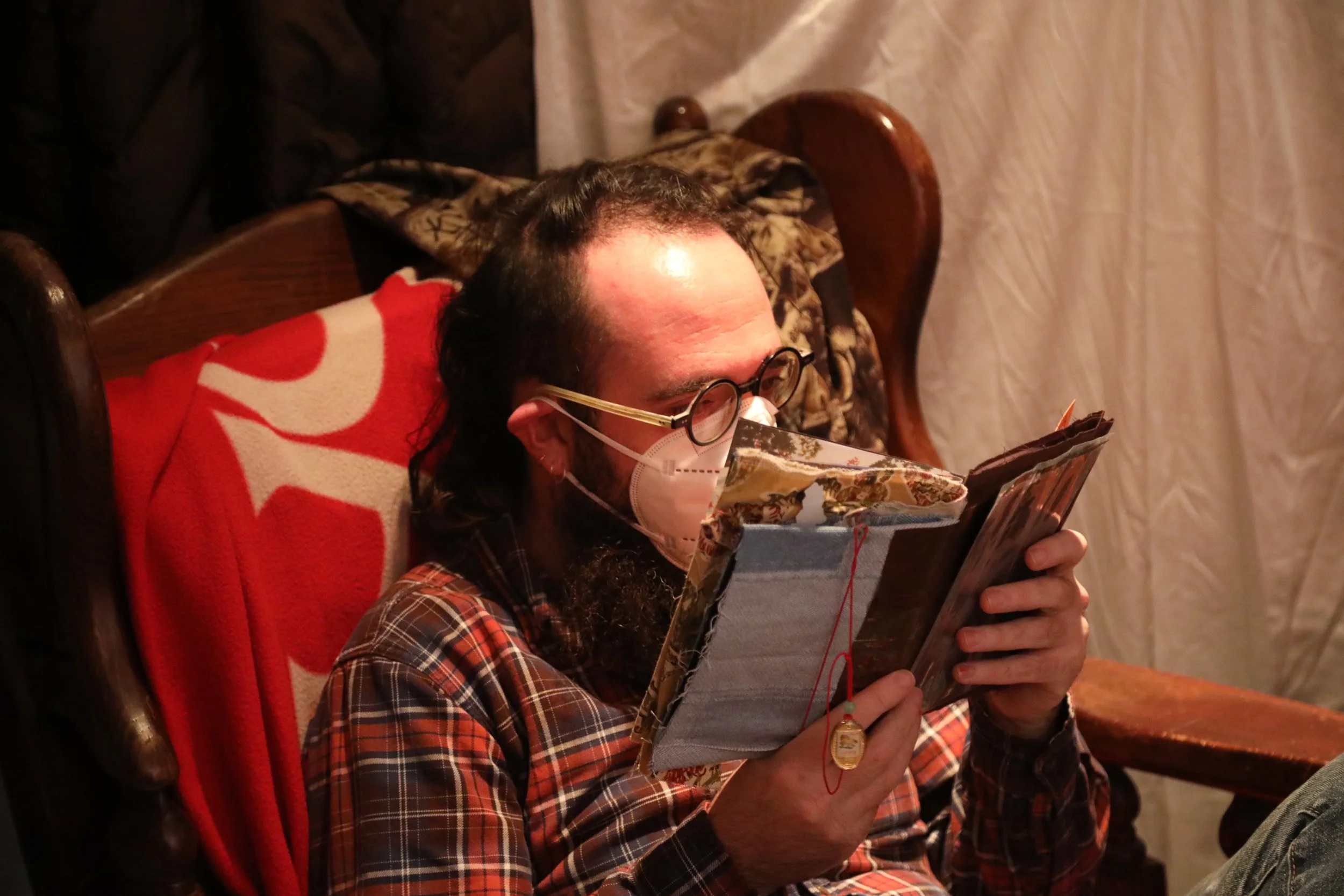
The installation was a piece of a home, sectioned with opaque burgundy curtains: on top of the rug sat a rocking chair with a fleece blanket, an acoustic guitar, and side tables piled with dusty books. A kitchen cabinet pressed against the back wall, hosting a crockpot full of warm grits, bowls, spoons, and appropriate fixins’ – butter, cheddar cheese, salt, and pepper — which audience members were invited to eat; a washtub with soap and water was tucked underneath. A boxy radio with an impressive antennae alternated between new and classic country music stations, and a projector placed a series of title cards on the wall which concluded with an open invitation to “eat each others’ grits and wash each others’ dishes.”
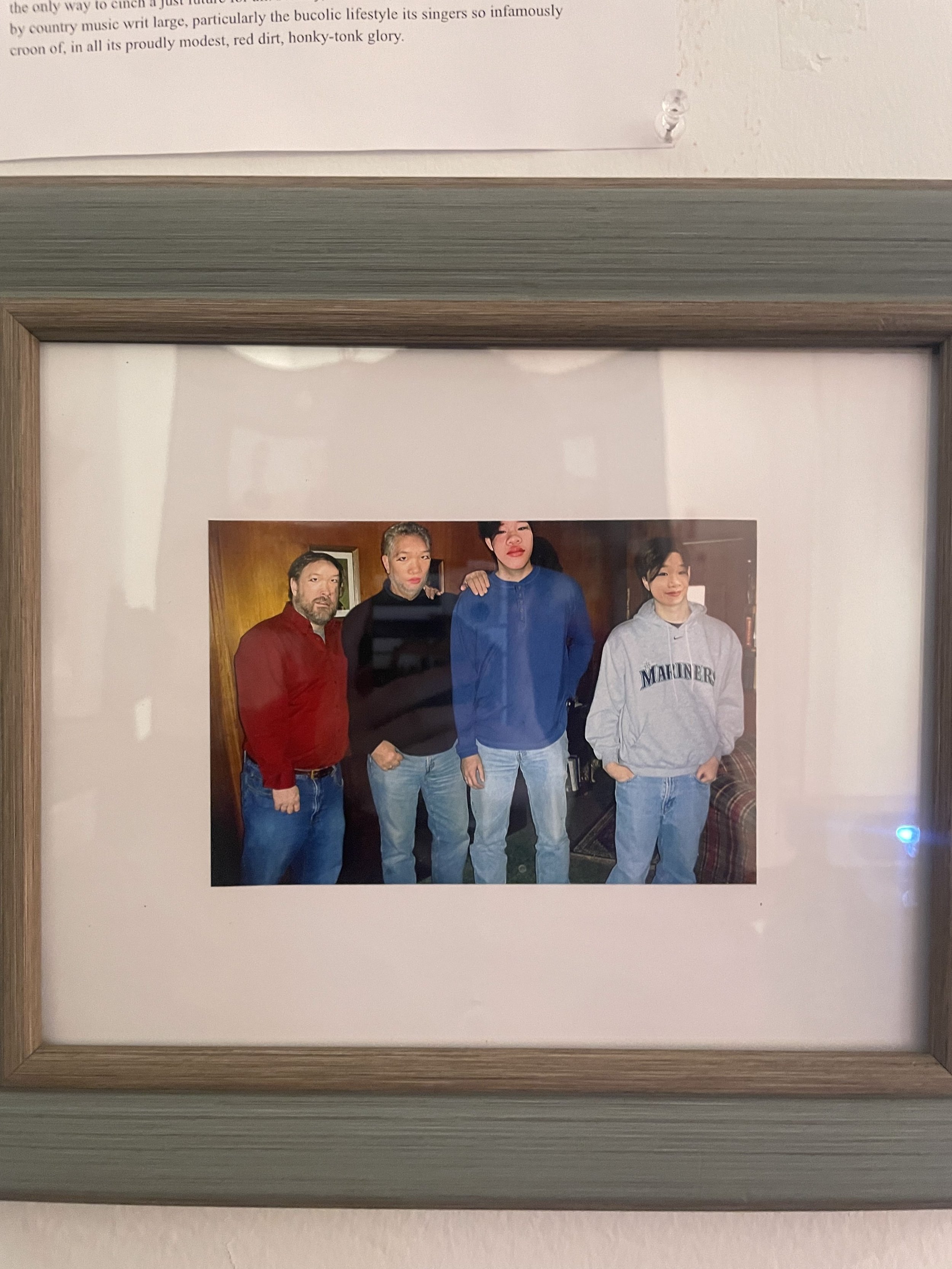
Still yet, my Chinese heritage creeped into the space – in the books on the tables, in the trinkets lining the catch-all dishes, in the framed photos on the walls onto which I had edited my face, Aphex Twin-style – and googly eyes invoke the notion of the rural panopticon, a phenomenon extrapolated by Chris Philo and Hester Philo and, in my experience, exacerbated for people of color in predominantly white spaces.
Made possible by: The John B. Moore Media and Documentary Studies Collaborative, the Skidmore Fund
Exhibitions: Case Gallery, Saratoga Springs, NY c. 2023